A Decade of Innovation, Invest in the Future | SONG Ruilin: Reshaping the Value Closed Loop of China’s Pharmaceutical Innovation via Market Institutions
2026-04-13 14:28
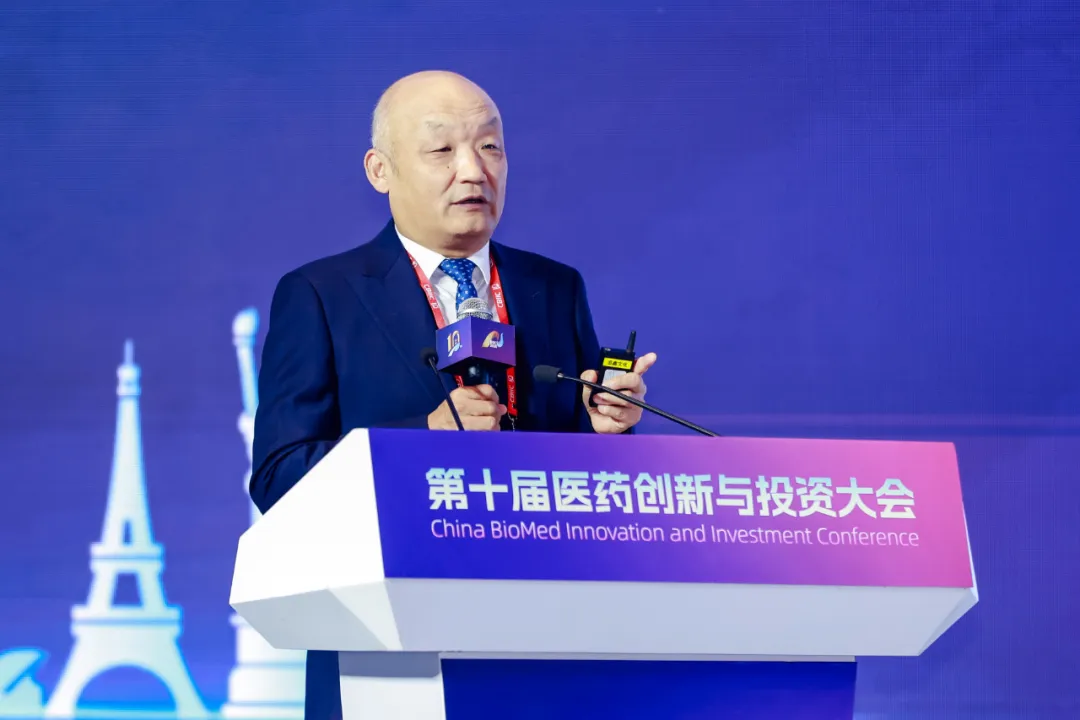
Over the past decade, China’s pharmaceutical innovation has achieved a leap from a “follower” to a “global player”. Today, the industry is entering a new stage: while R&D capabilities are rapidly improving, the maturity of institutional and market mechanisms still needs to catch up. At the 10th China BioMed Innovation and Investment Conference (CBIIC), SONG Ruilin, Eminent President, Chief Expert of the China Pharmaceutical Innovation and Research Development Association (PhIRDA), pointed out that to achieve high-quality and sustainable innovation in China’s pharmaceutical industry, establishing an innovation-friendly and inclusive market system is the core key factor. It shall be grounded in strengthened domestic demand, centered on evidence-driven approaches, supported by a multi-level payment system, and safeguarded by regulatory internationalization, enabling innovation to reward innovators.
Part 01
The Rise of China’s R&D Capabilities: From Technological Follower to Global Parity
The past decade has witnessed the full formation of China’s pharmaceutical industry system. Reforms in drug review and approval systems, intellectual property protection, as well as the return of capital and talent, have accumulated long-term momentum for innovation. According to data, in 2024, China accounted for more than 20% of the world’s top 100 life science research institutions in the Nature Index, five times its share in 2015. The number of clinical trials sponsored by Chinese developers reached nearly 2,000 in 2024, also five times the 2015 level. China accounted for 38% of innovative drugs with their first global approval in 2024, ten times the proportion in 2015. Meanwhile, China accounts for nearly 20% of global first-in-class (FIC) drugs under development. The proportion of breakthrough abstracts selected by Chinese pharmaceutical companies at the ASCO Annual Meeting has been in line with international standards. China’s innovative drug capabilities have shifted from “quantitative accumulation” to “qualitative competition”. However, SONG Ruilin emphasized that the real test of innovation lies not only in developing good drugs, but also in ensuring good drugs are rewarded in the market. The improvement of R&D strength must be matched by upgrades in the payment system, pricing mechanism and regulatory environment to drive innovation into a sustainable positive cycle.
Part 02
The Foundation of US Leadership: The “Siphon Effect” of an Open Market on Innovation Resources
The competitiveness of the US pharmaceutical industry is mainly driven by the maturity and openness of its market mechanism. It is not only the world’s largest pharmaceutical consumer, but also has an efficient system covering the entire chain of R&D, approval, payment and commercialization. Innovators can obtain sustained returns through a clear pricing system, capital can keep investing in a predictable environment, and the regulatory system safeguards the undertaking of innovation risks with transparency and predictability. Data indicates that in 2024, approximately 60% of the revenue of the world’s top 15 pharmaceutical companies on average came from the US market. Some companies, such as Amgen(94.8%), BMS(70.6%) and Gilead Sciences (71.6%), are highly dependent on US sales. This market scale and pricing flexibility have created a “siphon effect” on global innovative resources. Even for multinational pharmaceutical companies headquartered in Europe, the US market contributes more than 50% of their revenue. This means the US is not only the profit center for global pharmaceutical companies, but also the pricing center for the value of the entire pharmaceutical industry chain.
SONG Ruilin noted that the US has built an “incentive cycle” through market rules, forming a strong attraction that draws global innovative talents and capital to the US. It is global innovative talents that have secured the US’s dominant position in global pharmaceutical innovation. In contrast, the restrictions on innovative drug pricing in Europe and Japan have led to a contraction in innovation capabilities, highlighting the importance of the market. After Brexit, market fragmentation, complex payment systems and declining investment returns have driven a noticeable relocation of pharmaceutical companies.
SONG Ruilin concluded that this comparison proves only a sufficiently open and efficient market can promote sustainable pharmaceutical innovation.
Part 03
Sino-US Divergence: Challenges conversely drive “forced innovation”
The evolution of the global landscape has shifted the relationship between the Chinese and US pharmaceutical industries from cooperation to competition. Centered on “market sovereignty”, the US has strengthened its industrial control through multiple means such as drug review, procurement policies and data security. Measures including the Biosecurity Act, Most Favored Nation Drug Pricing and Section 232 Investigations reflect its intention to reshape the global pharmaceutical landscape through its market position.
While such external pressure poses challenges to Chinese enterprises, it is also forcing the self-improvement of the industrial system. Looking back at decades of development, China’s major breakthroughs in industries such as aerospace, telecommunications and chips have often emerged amid external blockades, and the pharmaceutical industry is no exception. The tightening external environment has prompted all parties in the pharmaceutical innovation industry to attach greater importance to original innovation, international registration and data accumulation. China’s innovation system is accelerating its maturity through “forced independence”.
Nevertheless, SONG Ruilin stressed that improving R&D capabilities is insufficient; the carrying capacity of the market mechanism must also be enhanced. Currently, innovative drugs account for only 8.6% of China’s pharmaceutical market, compared with 81.8% in the US. Spending per person on innovative drugs in the US is 125 times that in China. Our innovation capabilities have risen rapidly, but the payment and pricing systems have not yet formed an effective incentive structure, leaving a gap in the “value realization” of innovation.
Part 04
Core Solutions for Institutional Construction: Clinical Reform, Regulatory Internationalization and Diversified Payment
SONG Ruilin pointed out that one of the key factors for the further high-quality innovative development of China’s pharmaceutical industry is structural reform at the institutional level. The clinical research system, regulatory system and payment system should be linked to form a complete cycle for innovative drugs from R&D to reward.
Investigator-Initiated Trials (IITs) are an important tool for China’s innovative drugs to improve the quality of clinical validation and accumulate real-world evidence. SONG Ruilin emphasized that IITs are not only an extension of clinical research, but also a key link in improving the basic research ecosystem and opening up paths for original innovation.
The integration of the regulatory system with international standards is crucial for China’s innovative drugs to enter the global market. SONG Ruilin believes that regulatory capacity is not only a matter of drug review efficiency, but also of international trust. Hong Kong is expected to gain independent drug approval capabilities in 2026, becoming the first window for China’s innovative drugs to go global. Through the mechanism of “Hong Kong Approval, International Mutual Recognition”, China’s innovative drugs will achieve institutional connectivity between domestic and international dual cycles in the future, realizing a seamless transition from clinical R&D to global registration and providing institutional support for enterprises’ international layout.
Basic medical insurance and commercial insurance play different roles: basic medical insurance reflects social equity, while commercial insurance embodies market efficiency. The logic of medical insurance negotiations should shift to “dynamically determining payment standards based on real-world evidence”. For basic medical insurance, innovative drugs can be included first at payment standards consistent with similar indications in the medical insurance catalog, and re-evaluated two years later based on real-world clinical trial evidence: payment standards will be raised for superior efficacy, maintained for equivalent efficacy, and eliminated for inferior efficacy. This “inclusion first, verification later, dynamic adjustment” mechanism enables medical insurance to both control fund risks and incentivize clinical value-oriented pharmaceutical innovation. Meanwhile, commercial insurance should shift from a “medical insurance supplement” to an “independent system”. SONG Ruilin noted that commercial insurance models bounded by region and household registration, represented by supplementary medical insurance, cannot support innovative drug payment. Genuine commercial insurance should be market-oriented, establish direct compensation mechanisms and independent drug catalogs, and increase coverage through tax deductions and corporate incentive policies. Basic medical insurance focuses on livelihood security, while commercial insurance undertakes market stratification, jointly building a multi-level and sustainable payment system.
Part 05
From Industry to Economy: Making Innovation a New Engine for China's Growth
The implementation of clinical reform, regulatory systems and payment mechanisms is not only critical to the pharmaceutical industry itself, but will also become a new growth driver for China’s economy. SONG Ruilin emphasized that improved cash flow for innovative drug companies will drive employment, tax revenue and capital return, forming an economic cycle of “innovation-reward-reinnovation”. This is the key to the high-quality development of China’s pharmaceutical innovation: transitioning from “policy-driven” to “institution-driven”, and from “R&D breakthroughs” to “market maturity”, making innovative drugs a stable driving force for China’s economy and a new source of global competitiveness.

 Conference Affairs Contact
Business Affairs Contact
Media Cooperation Roadshow Contact
Conference Affairs Contact
Business Affairs Contact
Media Cooperation Roadshow Contact
© 版权所有 中国医药创新促进会 京ICP备11012814号-1